Quality begins before the study reaches the reader
The final report depends on the images acquired, the views completed, and the sonographer's ability to adapt the exam to the clinical question. When acquisition varies across experience levels, shifts, or sites, the medical director inherits the consequences through repeat imaging, uncertain findings, delayed decisions, and difficult quality conversations.
A technology evaluation should therefore begin with the lab's acquisition standard. Define the required views, acceptable variation, escalation path, and measures of completeness before asking whether a new platform improves the process.
Workforce sustainability belongs in clinical governance
Pain, turnover, vacancies, and uneven training can affect the consistency of a service long before they appear in a formal quality metric. Senior sonographers often carry the most complex studies, teach developing staff, and stabilize the lab during difficult days. Protecting that expertise supports the clinical program as well as the workforce.
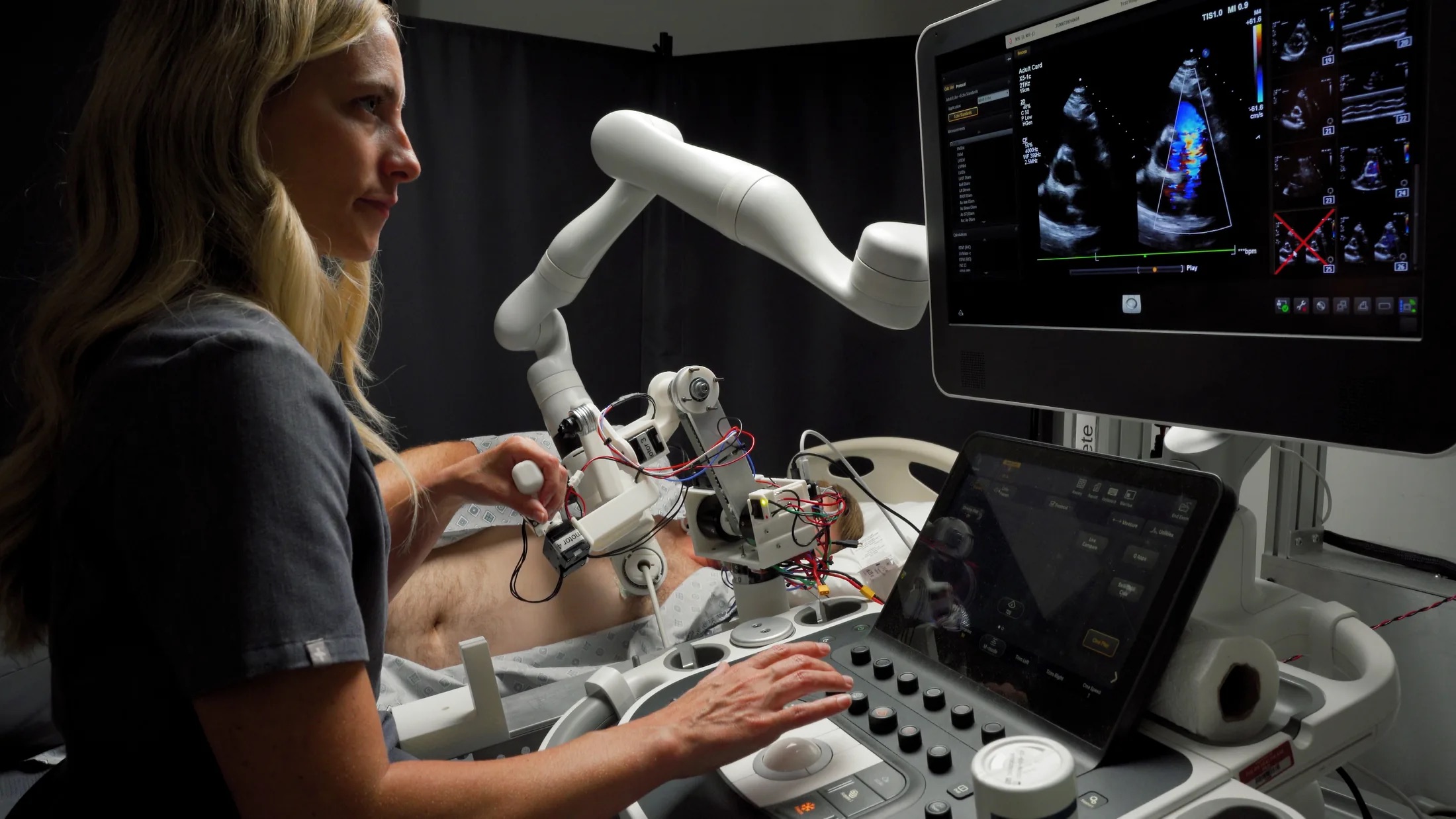
Apricity is developing robotic assistance around the physical work of cardiac ultrasound. The clinical question is whether that support can fit the protocol, preserve sonographer control, and contribute to a more reliable acquisition environment.
Lead with an evidence plan
A mature adoption process distinguishes design intent from demonstrated performance. Medical directors should ask which population was studied, how image quality was defined, who acquired and interpreted the studies, what comparison was used, how failures were handled, and whether results transfer to the local workflow.
Apricity should make those questions part of the partnership. Evidence, limitations, and intended use must remain visible at every stage of development.